Enabling Precision and Process Control for Additive Manufacturing
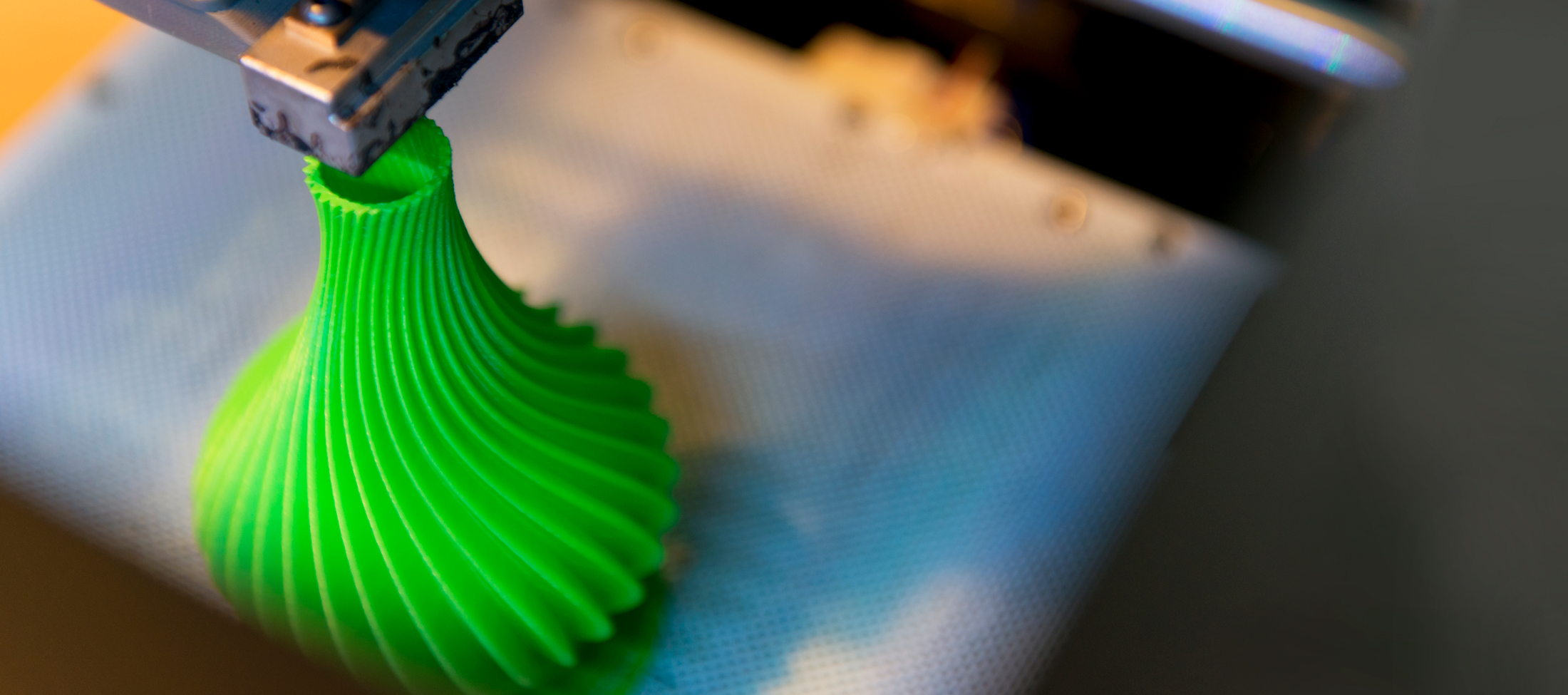
3D printing continues to advance as a high-volume manufacturing method for complex-shaped parts made from a variety of materials.
Although 3D printing methods and equipment were first developed more than 30 years ago, the technology has evolved from a prototyping tool into a viable method for high-volume manufacturing across virtually every industry. As its applications have expanded, the process is now more commonly known as additive manufacturing.
From a digital 3D model or CAD file, computer-controlled printing processes can produce complex shapes and geometries in plastic polymers, metals, or even living cells. These capabilities support applications across aerospace, automotive, consumer products, medical, and many other industries.
Powder-Based Additive Manufacturing
Additive manufacturing makes it possible to produce complex parts directly from 3D CAD data. In powder-based industrial 3D printing, a thin layer of powdered material is distributed across a construction platform. A laser beam then fuses the material layer by layer according to pre-configured construction data.
As additive manufacturing evolves, expectations for part quality, dimensional precision, and process efficiency continue to increase. Reliable thermal control inside the build chamber is an important part of meeting these requirements, especially when working with powder materials that must be processed under consistent heating conditions.
Powder Bed Preheating with energy efficient Infrared systems for Consistent Part Quality
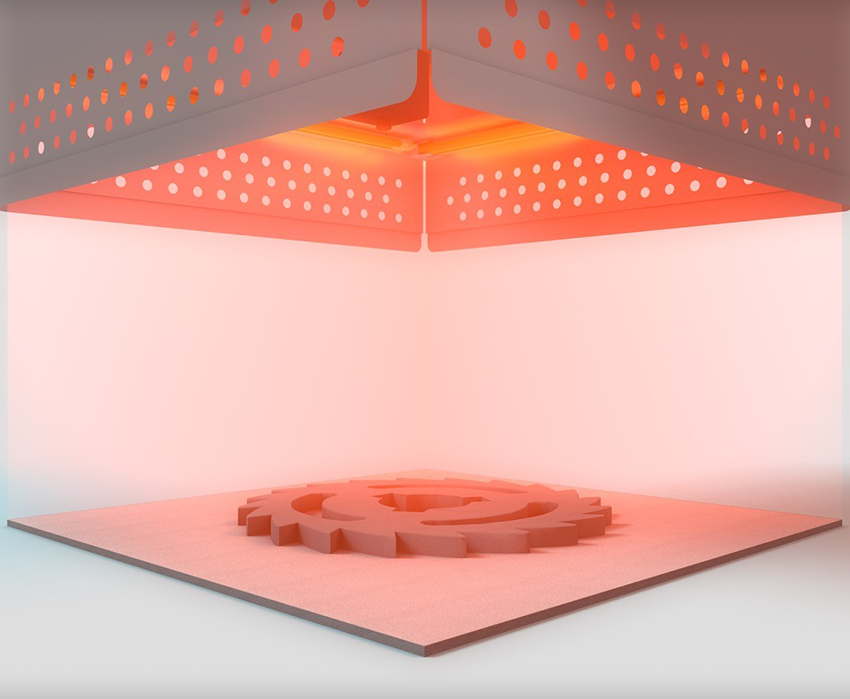
Powder bed preheating is a critical step in many additive manufacturing processes and is commonly performed using infrared emitters. Along with the type of powder material used, uniform heat distribution within the build chamber plays an important role in achieving consistent part quality.
Infrared heat provides targeted energy for preheating the powder bed before and during the build process. By supporting uniform thermal conditions, IR emitters help create a more stable process environment for layer-by-layer manufacturing.
Tailored Infrared Emitters for Additive Manufacturing
Excelitas offers Noblelight infrared lamps that can be precisely tailored to the material in terms of power, form, and wavelength. This flexibility allows infrared heat to be matched to the specific powder material and process requirements.
Light Sources, Optics, and Lenses for Additive Manufacturing
Excelitas also supports additive manufacturing with polymer-curing UV LED and lamp light sources, as well as projection optics and lenses. These technologies can be used for sintering, microscopic monitoring of metal printing streams, or helping steer and shape the growth of cells into the desired biological tissue.